

Sept. 2, 2024
None have the faith of farmers. To toil each season, relying on the whims of wind, is inspiring, to say the least.
Inwardly, I am an industrialist. My skin prickles and bumps at the sight of a machine performing the duties of dozens of men in a moment. This is the age we live in, one of wonder and power. Mankind has accumulated energy and put it to work for the progress of the individual. Yet, many misunderstand and criticize capitalism, labeling it corrupt and even oppressive. In reality, it is one of the few just and pure systems still tangible. Without capital and the incentives of capitalism, producing the food we consume would have required the slavery of both man and beast to generate the necessary energy to tend the earth. Necessity led to the use of beasts of burden, but capitalism liberated them—and us common folk. Most of us were once farmers out of necessity until capitalism came along. It also gave us the tractor and combine, revolutionizing agriculture and freeing us from the backbreaking labor of the past.
“Capitalism is the only system in history where wealth was not acquired by looting, but by production, not by force, but by trade, the only system that stood for man’s right to his own mind, to his work, to his life, to his happiness, to himself.”
— Ayn Rand
We stand on the shoulders of giants, yet in our complacency, we risk squandering their legacy. It’s time to rise, innovate, and honor their vision. This is why I have written this piece, “Faith and a Farmer’s Daughter.” I am weak, a coward compared to the daughter of said farmer. This daughter was diagnosed with lupus and lost her mother at the age of six. She, the eldest of four, was left alone with a father who had a farm to run. Each small child inherited a full-time job before reaching school age. As farmers, they had little choice but to persist until they harvested. They were not afforded the luxury of laziness so common among us today. As the wisdom of Proverbs 20:4 so boldly shouts, “The sluggard does not plow after the autumn, and so he begs during the harvest and has nothing.” They needed to commit themselves to the cause of the family farm.
This farmer’s daughter, now nearing the end of her adventure, is none other than my grandmother, known to me by the revered title of “Meema.” This woman is a saint among sinners, the energizer bunny. She had four of her own children and has been blessed with seven biological grandchildren. (even more by marriage) Each of us owing any of the good in us primarily to her care. As matriarch and marvel, she can still be found gardening and serving those she loves despite the setbacks of life and age and the diagnosis of Interstitial Pulmonary Fibrosis (IPF) secondary to Lupus. Not much stands in her way, well not for very long anyway. She has told me for as long as I can remember, “Where there is a will, there is a way.” She has lived this truth the whole time I have had the privilege of knowing her. I suspect it is much the same for those who have the honor to know her even longer.
I may have been born into a family of manufacturing, but my Meema is a constant reminder of the Farm and the Way of the Farmer.
Thomas Jefferson once wisely noted,
“Agriculture is our wisest pursuit, because it will in the end contribute most to real wealth, good morals, and happiness.”
Allow me to continue the use of archetypal language to make the point.
My grandmother exemplifies The Sower. She not only plants fruits, vegetables, and a plethora of flowers, but also sows seeds of love and grace each day. She carries her cross without so much as a whimper, diligent in her service and love. She is an inspiration to anyone who has had the pleasure of experiencing her joy. A lasting impression and a more fertile heart are the fruits of her seeds.
She is also The Shepherd, a constant light in a dark world. Leading with meekness and determination, she embodies the strength and resilience of a much more savage creature. As both defender and nurturer, her petite yet fierce frame, with ice-cold calloused hands worn by the warrior and farmer alike, also warms the heart and soul with a mere hug.
Finally, as The Steward, Meema embodies responsibility and resourcefulness. She has lived sustainably and passed on a disdain for waste to her descendants. Her harvest will yield bountifully for generations to come. No sheep was ever lost on her watch; all returned safely to their shelter before nightfall. Even now, I can vividly recall when she would make my brothers and me sit silently. Staring at each other until we had something nice to say before we could return to playing. She seemed to really enjoy the hard work, of raising rebels.
“Farming looks mighty easy when your plow is a pencil, and you’re a thousand miles from the corn field.”
— Dwight D. Eisenhower
I cannot testify beyond a few days of failing to keep up with actual farmers in my youth, but I can say from the scars my Meema silently bears, farming is anything but easy. It requires constant labor and faith that an increase will come, and if not, the endurance to repeat it all again next year regardless of the harvest. Booker T. Washington wisely said, “No race can prosper until it learns there is as much dignity in tilling a field as in writing a poem.” Certainly, farming is a perilous way to profit, but thankfully, we have made it much more efficient. This efficiency does not ensure success, however. Credit for success must be given to the persistence of farmers. Their persistence, like that of my grandmother, is not just about the crops they grow but about the communities they nourish and the lives they touch.
Although I disavow and wholeheartedly reject Cesar Chavez’s views on most everything, I must give him credit for a single point in his powerful words:
“The fight is never about grapes or lettuce. It is always about people.”
Although I would clarify this by echoing Ayn Rand, human beings are the living generators, giving light to the world. We are the motor driving destiny. Adding my own thoughts, faith and fate are woven together in the fabric of reality.
So, if we find the work ethic, the faith, and the persistence of a young Farmer’s Daughter, I am convinced by the life I have witnessed that we too can live an abundant life that inspires and innovates generations to come.
By understanding and appreciating the faith and persistence of farmers, we can draw inspiration for our own lives. Whether we are planting literal seeds or metaphorical ones, the lessons of the farmer show us a life of purpose, resilience, and hope. One worth the work so desperately needed to be done.
To show the radiance of her, here is one of my favorite photos;
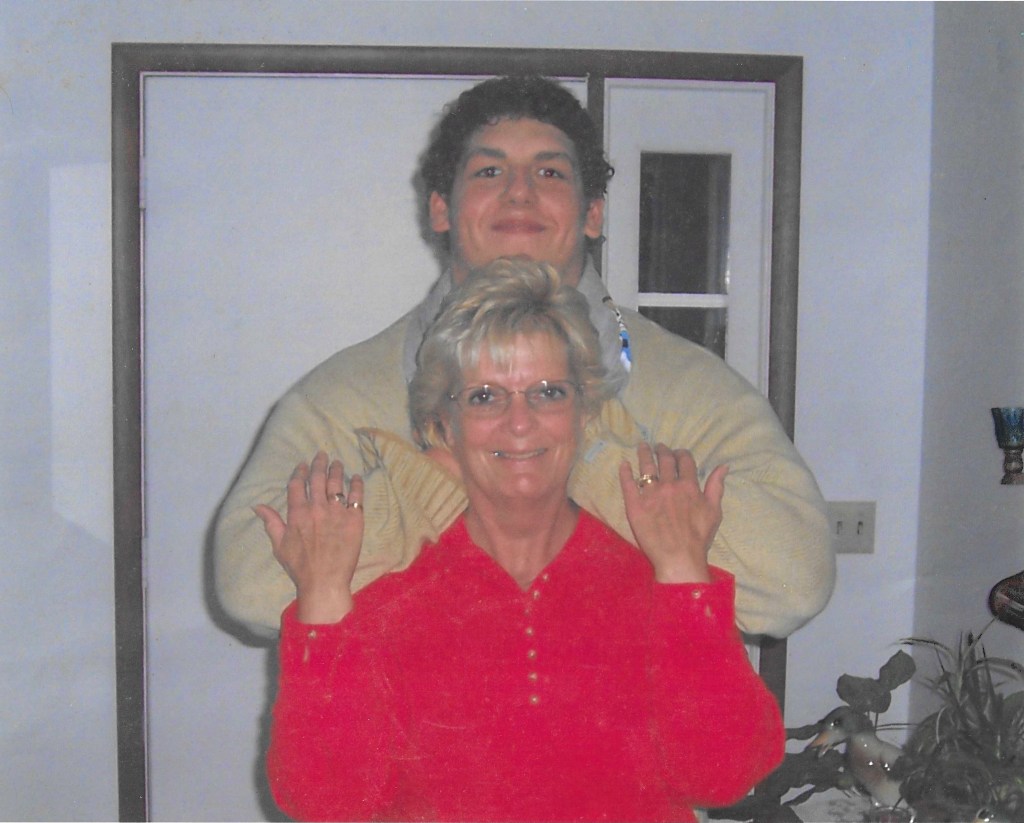
Meema and Me in 2005:
 Matty Thinks
Leave a comment