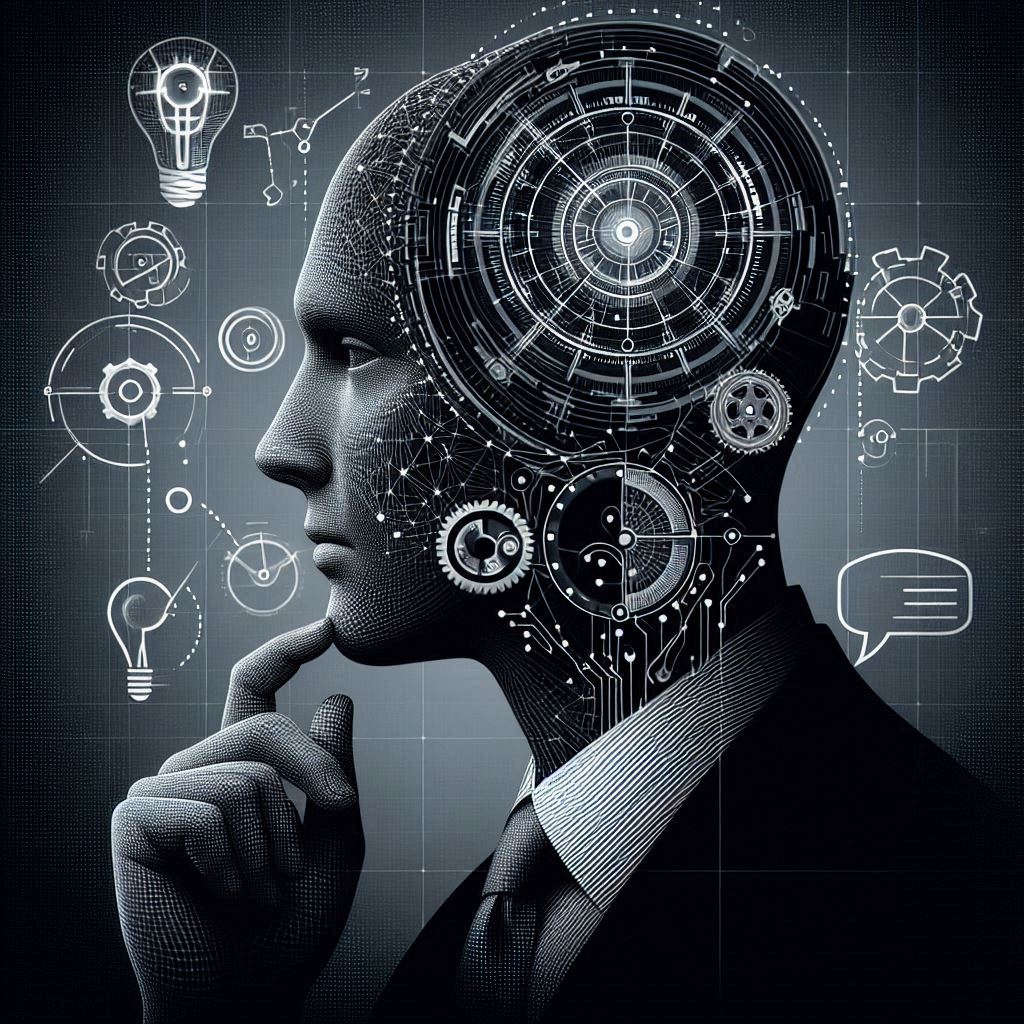

Where do we even begin to draw the line?
In our fast-paced digital age post-modern world, we are constantly bombarded with stimuli.
It ranges, each of has our own tolerance and taste of this new phenomenon in the story of mankind.
Whether it is from the the incessant notifications of our devices or the sensory overload of dense urban environments, we all face an onslaught of opportunities and pitfalls.
Speaking with a flare of drama, it would seem the world has gotten used to instant gratification, and that even the slightest inconvenience is now met with gasps and public outcry. How quick we are to remind everyone else just how unacceptable it is…
(For example, what did you just think of? I mentioned nothing specific, yet something likely came to mind.)
Caught up in a hurricane of happenings, we must be quick, and well adapted to the wind and rain, in order that we might survive the storm. Most of us are not content merely surviving, and for us to thrive we need to satisfy the requirements of some stimuli to be prepared.
So, the questions arise:
How much is too much?
Where do we draw the line between necessary stimulation and overwhelming noise?
To start, it’s best to understand what something is and what it does.
The Role of Stimuli
Let’s explore some of the ways in which stimuli are essential.
In biology, stimuli are the sparks that ignite the dance of life. They are the environmental cues—light, sound, touch—that trigger responses in living organisms. A plant bends towards the light, a reflex action in response to the stimulus of sunlight. Nerve cells fire in response to the stimulus of a pinprick, sending signals to the brain. Stimuli are the invisible hands that shape the behavior and growth of all living beings.
In psychology, stimuli are the keys that unlock the doors of perception. They are the external events or conditions that evoke a response from the mind. A familiar scent can transport someone back to a childhood memory, a stimulus that triggers an emotional response. The sound of a loved one’s voice can bring comfort and joy, a stimulus that influences mood and behavior. Stimuli are the threads that weave the tapestry of human experience.
In economics, especially that of the in my opinion completely contemptible Keynesian school of economics, stimuli refer to measures taken to boost economic activity. Such as Government stimulus packages, by means such as tax cuts or direct payments, which in their infinite wisdom are designed to spur spending and investment during economic downturns. These financial stimuli aim to revive the economy, much like a spark that reignites a dying flame. I see them as more of hand holding capital to the flames like Icarus wings to the sun, but to each their own. They are the catalysts that drive at least the visible public market. But I digress.
Coming full circle back to technology, stimuli are the inputs that drive systems and processes. Sensors detect changes in the environment, such as temperature or motion, and respond accordingly. A smartphone screen lights up in response to the stimulus of a touch. In artificial intelligence, stimuli are the data points that feed algorithms, enabling machines to learn and adapt. Stimuli are the signals that power our digital world, offering us a mirror of madness. Each of us can with care can sanely stare, to learn whatever we dare.
So TL;DR: Stimuli Summary:
Stimuli are essential for our survival and growth. They help us learn, adapt, and respond to our environment. However, the sheer volume of stimuli in today’s world can lead to sensory overload, stress, and burnout. Be careful and take care of yourself, because the world will not.
Where Can We Find the Balance?
If I had found the “balance,” I might not entirely have such a compulsion to explore such topics. However, I will share what I have found to serve.
Finding the right balance of stimuli is crucial for our well-being.
It first involves setting some boundaries.
These clear expectations must be kept! (Especially the self-imposed ones)
Also, the boundaries and expectations will need to be mutually agreed upon if they involve other parties who may have an interest. (No one reading this is without some duty and responsibility, you owe it to yourself to make your intentions known.)
The next steps could be prioritizing more meaningful interactions, and/or creating spaces for rest and reflection after an excess of stimuli.
Writing, for instance, helps me the most. By being mindful of the stimuli, we can be intentional in what we expose ourselves to, therefore we can maintain a healthy equilibrium. Ironically, that is in part, exactly what I am currently attempting to do.
The word “stimuli” is a multifaceted gem, reflecting different shades of meaning across various disciplines. Whether it is the triggers of life, the keys to perception, the catalysts for growth, the inputs for systems, the artistic inspirations, or the poetic cues, stimuli are the tangible forces that drive action and response. – Cause and Effect. (Even a correlation is worth making a note of)
Stimuli are also invisible threads that connect us and animate the world around us. (Think – The ever-triangulation of Self…)
In a world filled with constant stimuli, it is essential to find a balance that allows us to thrive.
By drawing the line in sand as it were and being intentional about our sensory experiences, we protect and nurture our mental and emotional health.
As someone with a background in manufacturing and a current role in quality, I understand the importance of managing inputs to achieve desired outputs. Even though it is never easy, I know it is Required.
This principle is critical in life as well—since we only live once, it matters immensely.
By thoughtfully and intentionally managing our inputs, we can reach new heights and achieve personal growth and fulfillment.
It’s time to wake up and realize who—or worse, what—is driving the “vehicle” that is each of us.
 Matty Thinks
Leave a comment